

Central AC vs. Ductless Mini Split: Pros and Cons for Your Home
Both central AC and ductless mini-split systems are popular choices to keep your home cool during the hottest months. However, the right choice for your home depends on your existing infrastructure, comfort goals, and layout.
Below, we’ll provide an in-depth comparison of central ACs and ductless mini-splits in terms of flexibility, efficiency, installation, and more. This can help you make a better-informed purchasing decision for your next air conditioning installation.
Central AC vs. Ductless Mini-Split: What’s the Difference?
Central air conditioning systems rely on traditional ductwork to distribute cold air via vents throughout your home. Ductless mini-split systems use individual air-handling units to treat air in each area, operating without ductwork. You might see mini-splits in home additions, as it can be difficult to add onto existing ductwork. Otherwise, mini-splits are ideal for homes where adding ductwork is inadvisable. Central air conditioning is most common in homes where ductwork already exists, such as for furnaces.
Considerations for Central AC
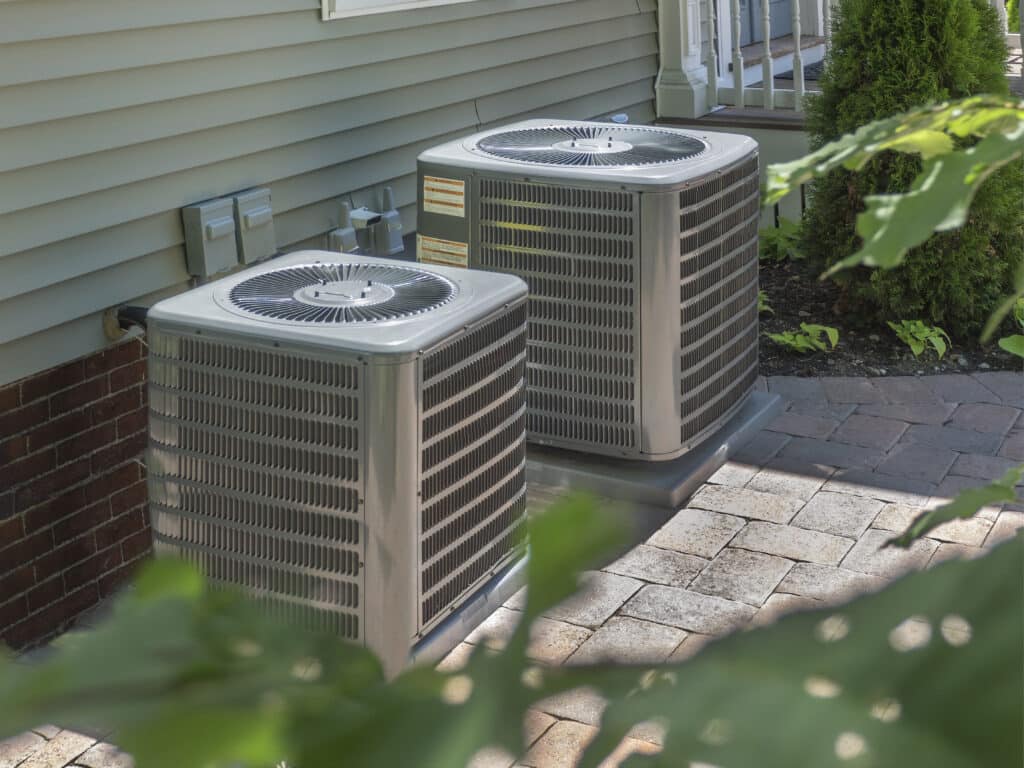
Central air conditioners cool your entire home at once, sending cooled air through your ductwork to its destination. If your home already has central air, chances are you’d replace it with the same type of system.
Central AC Pros
One of the biggest advantages of central air conditioning is that it can easily integrate with your existing furnace setup. This works well for larger homes with open layouts, as you can control the temperature throughout your home to keep your family comfortable. Central AC offers whole-home cooling with consistent airflow. It has hidden equipment that’s very discreet, with only air vent grates showing indoors.
Central AC Cons
Central air conditioning systems do require ductwork to operate. If you have an older home without ductwork and rely on a boiler, installing ductwork after the fact can be expensive. Additionally, ductwork always carries the risk of air leaks.
Both aging and damaged ductwork can allow your conditioned air to escape into floor cavities rather than reach the rooms of your home. This can significantly reduce your system’s efficiency and increase your energy bills.
When Is Central Air Conditioning the Best Fit?
Central air conditioning can be a great fit for homes with existing ductwork. Homeowners with a heating system who want to enjoy centralized cooling can benefit from installing central air conditioning. In fact, central ACs can be the most cost-effective option up front for adding cooling to your entire home.
Considerations for Ductless Mini-Split Systems

Ductless mini-split systems are a popular choice for homeowners who don’t have access to traditional ducting. These energy-efficient units offer many advantages, including zone temperature control and flexible installation options.
Ductless Mini-Split Pros
One of the biggest advantages of using a ductless mini-split system is that it doesn’t require any traditional ducting. This makes it super easy to retrofit into existing homes without ductwork. Mini-split systems provide zoned cooling for individual rooms, as you can set each unit at its own temperature. This can help save money by focusing cooling where it’s needed most. You also gain energy efficiency because there’s no risk of air leaking out of ducts.
Ductless mini-splits are a flexible option for home additions, basements, and garages. Additionally, mini-splits can provide both heating and cooling in one unit.
Ductless Mini-Split Cons
One of the biggest disadvantages of ductless AC systems is their high visibility. While ceiling-mounted units exist, wall-mounted ones are most common. They come with a higher upfront cost, so the savings you might see will occur over the long term. Installation costs can vary depending on the number of zones in your system. Many larger homes will need multiple indoor units to remain comfortable.
When Are Ductless Mini-Splits the Best Fit?
Ductless AC systems can be a great option for older homes without traditional ductwork. If you’re experiencing uneven cooling problems throughout your home, adding mini-splits to rooms with inconsistent temperatures can be highly beneficial. They’re a great option if you have a converted space or home addition that your traditional ductwork does not reach. Additionally, homeowners seeking room-by-room comfort control can benefit most from a mini-split installation.
Request HVAC Installation Today
Both central air conditioners and mini-split systems can offer many valuable benefits to homeowners throughout Virginia. While neither system is universally better, each has its own applications. For example, if you’re upgrading an older central AC system to enhance efficiency and reliability, a new central AC is the best option. However, if you’re looking to add air conditioning to an older home that lacks ductwork or to a single new room, a mini-split system can be the better choice.
We always encourage homeowners to evaluate their home layout, existing ductwork, energy goals, comfort preferences, and plans when making their ultimate purchasing decisions.
Contact McCrea Heating & Air Conditioning today for a professional recommendation on air conditioning installation in Northern Virginia.